Market Reframing, Market Pivot, Misaligned Brand Promise
What Baidu's Fall Teaches About Market Reframing
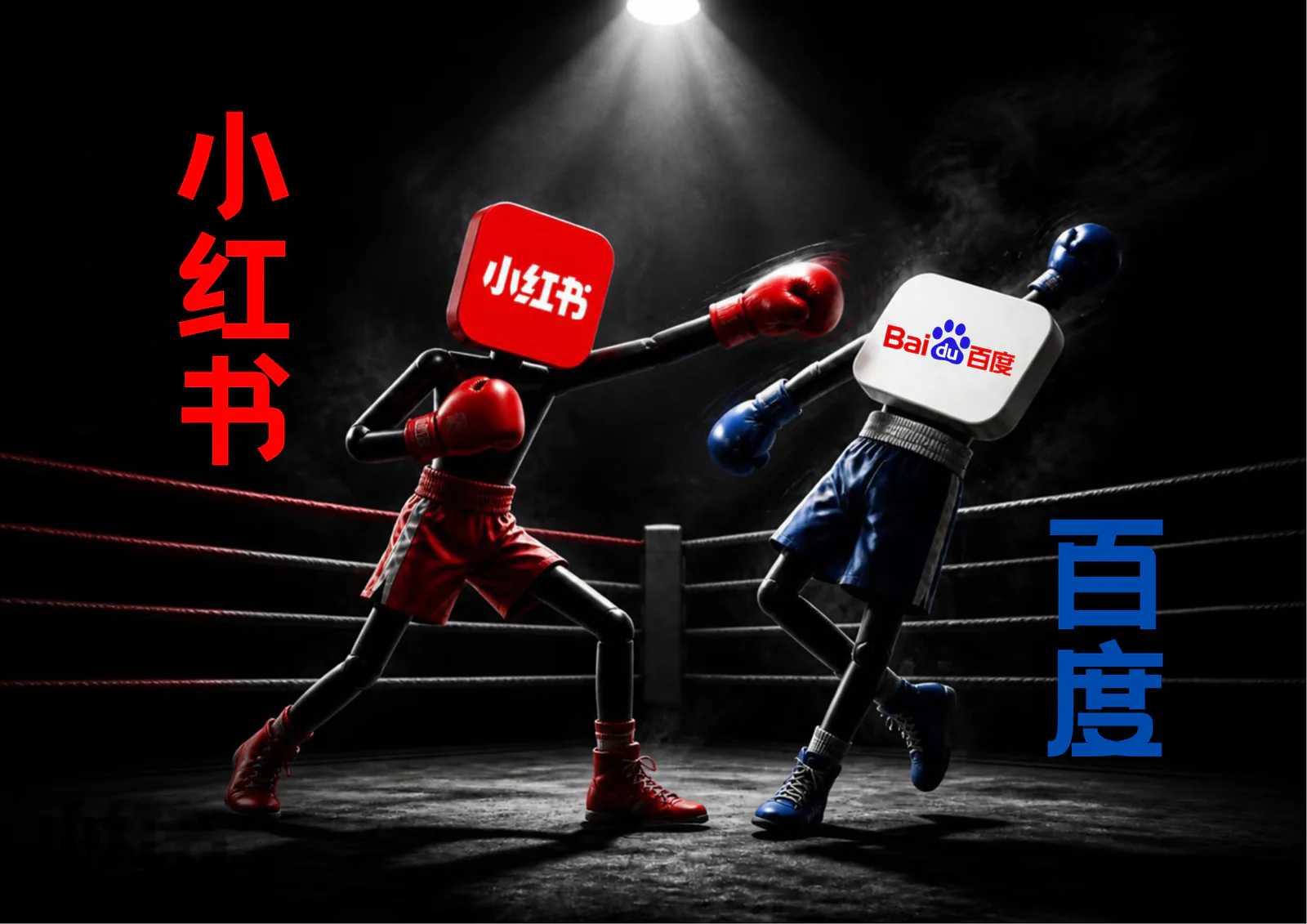
Baidu missed its pivot moment. Xiaohongshu didn't. Discover how early detection of brand misalignment unlocks growth through strategic reframing
The companies that collapse aren't usually the ones that fail to innovate. They're the ones that fail to notice they've stopped delivering on their promise.
For 20 years, Baidu was the answer to every question in China. If you didn't know something, you asked Baidu. The company handled 80% of all searches. Revenue climbed. Profit climbed. The formula seemed unbreakable: own the top of the page, sell the position to whoever bid highest, repeat.
But there was a gap no one wanted to see.
Baidu's brand promise was simple: We give you the answer you need.
What they actually delivered: We give you the answer that paid the most.
Those aren't the same thing. For years, they operated as if they were.
In 2016, a 21-year-old student named Wei Zexi searched Baidu for treatment of his rare cancer. The top result—a military hospital offering experimental immunotherapy—appeared first because it had paid for that spot. His family borrowed $31,000 for a treatment that didn't work. Wei died, and afterward, he posted the story on Zhihu, China's version of Quora.
The truth landed: Baidu's top results weren't ranked by quality or relevance. They were ranked by money.
Regulators moved fast. Ads were capped at 30% of any page. Paid results had to be labeled with a warning. The first page went from 18 possible ad slots down to four.
Baidu had fixed the mechanics. What they didn't fix was the story people told themselves about the company.
But here's the critical moment Baidu missed: That 2016 scandal wasn't the beginning of the problem. It was the symptom of a misalignment that had existed for years. And Baidu didn't pivot.
They should have asked themselves a hard question: Are we a search engine that ranks by quality, or are we a marketplace that ranks by price? Pick one. Commit to it. Rebuild everything around it. Instead, they tried to be both. They added labels to the ads, capped the slots, and hoped the market would forget.
For the next ten years, Chinese consumers kept asking one question every time they used Baidu: Is this the answer, or did somebody buy this?
That doubt doesn't fade. It compounds.
While Baidu was failing to reframe, something else was happening on the other side of the market.
Xiaohongshu's reframe was the opposite story.
The app started in 2013 as a shopping guide for Chinese tourists—nothing more. You were flying to Tokyo, you downloaded a guide, you saw which department store to visit. That was the entire business.
But the team noticed something early. Users weren't just reading the guides. They were posting photos of things they'd actually bought—prices, receipts, verdicts. Other users were treating those posts as search results. They were asking each other, not asking Baidu.
Here's the critical moment Xiaohongshu didn't miss: They recognised that the real value wasn't the curation. It was the trust network. Peer validation. Authenticity. They leaned into it hard.
The company rebuilt the entire product around that insight. They didn't try to be a search engine. They didn't try to compete with Baidu on technology. They became a platform where the only thing that ranked at the top was what real people had actually bought and recommended.
No paid listings. No ambiguity. No scandal waiting to happen.
By mid-2023, Xiaohongshu was handling 300 million searches a day. By early 2025, it was 600 million. More importantly, they were capturing the searches that mattered most—the ones where someone was about to spend money. The ones where trust was everything.
The contrast is stark:
Baidu detected a misalignment between their brand promise (quality answers) and their actual delivery (paid answers), failed to pivot early, watched trust erode for a decade, and when they finally tried to reframe by introducing AI answers, it was too late. The market had already left.
Xiaohongshu detected an emerging user need (peer validation over curation), pivoted aggressively around that insight, and captured exponential growth because everything aligned—product, promise, and delivery all pointed the same direction.
By 2025, Xiaohongshu had more than 400 million monthly users and net profit above $2 billion. Analysts expect $3 billion this year. For scale, that's more money than Pinterest and Snapchat made combined. The company filed for IPO in Hong Kong with a target valuation north of $70 billion.
Baidu, meanwhile, reported its worst revenue quarter in history.
Here's where the principle lands:
Misalignment between what you promise and what you deliver doesn't kill you on day one. It kills you slowly, then all at once. The companies that survive aren't the ones with the best technology. They're the ones that notice the gap early and pivot hard.
Baidu should have made that move in 2014 or 2015—the moment they realized their business model was in conflict with their brand promise. Not in 2025, when 91 million users were already walking toward Xiaohongshu.
Xiaohongshu moved in the opposite direction. They saw early that users wanted peer validation, not algorithm curation, and they rebuilt their entire product around that. That alignment—between what the market actually needed and what they chose to deliver—is what unlocked the exponential curve.
Most businesses face this choice at some point:
You're positioned as one thing but built to deliver another. Your team knows it. Your customers feel it. Growth stalls.
The question isn't whether you'll eventually have to reframe. You will. The question is whether you'll do it when you still have time, or whether you'll wait until the market has already moved to someone else.
Baidu waited. They had ten years to notice and pivot. By the time they tried to introduce their AI reframe in 2025, Xiaohongshu had already answered the question the market was asking: Who do I trust?
That's the lesson. Not about AI. Not about features. About timing.
The businesses that thrive detect the gap early enough to pivot. If there's a misalignment in your business right now—between what you promise and what you're set up to deliver—the time to reframe isn't next quarter. It's now.
Because while you're deliberating, someone like Xiaohongshu is probably building toward your customers already.